Prebiotic and Probiotic Macro Bowls
When it comes to nourishing your body while satisfying your taste buds, nothing quite beats a vibrant macro bowl. These bowls combine a colorful array of ingredients, ensuring a balance of nutrients that not only fuel your body but also promote gut health. Today, we’re diving into the world of Prebiotic and Probiotic Macro Bowls, featuring roasted vegetables, leafy greens, and gut-friendly toppings. This dish is perfect for meal prep, a quick lunch, or a wholesome dinner.
Why This Recipe Belongs in Your Rotation
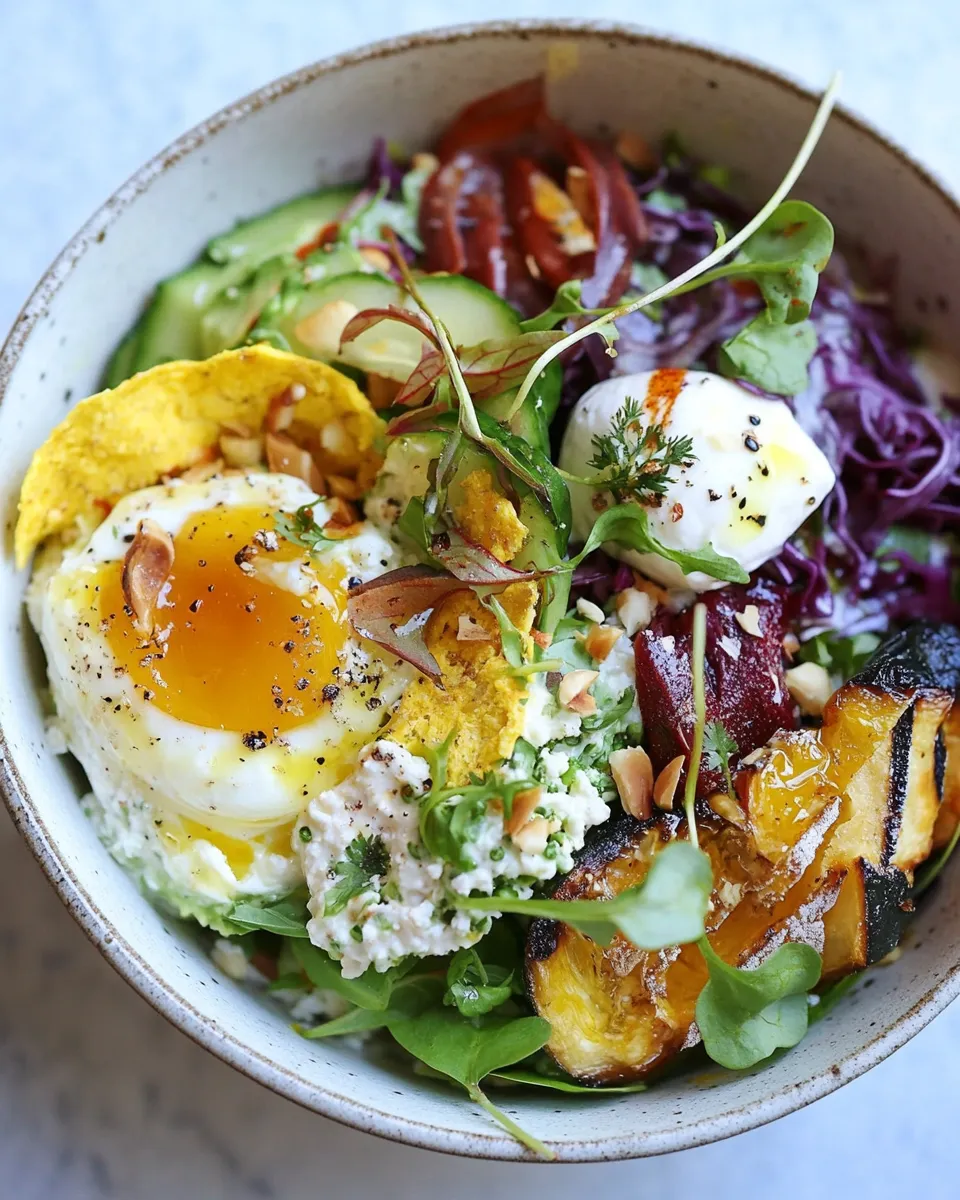
Incorporating Prebiotic and Probiotic Macro Bowls into your meal rotation means embracing the goodness of both prebiotics and probiotics. Prebiotics, found in foods like squash and zucchini, serve as food for beneficial gut bacteria, while probiotics, like those found in sauerkraut and kefir, help to maintain a healthy gut microbiome. This bowl not only delivers a punch of flavors but also supports digestion and overall wellness. Plus, it’s incredibly versatile, making it easy to adapt based on the seasons or your personal preferences.
What You’ll Gather
- 1/2 small spaghetti squash, roasted
- 1 large beet, roasted
- 1 large zucchini, roasted
- 2.5 ounces mixed leafy greens (I used beet greens, baby spinach, and baby chard)
- 1 cup sauerkraut (see note*)
- 2 eggs, sunny side up
- 1/2 avocado, sliced
- 1/4 cup micro greens
- 2 tablespoons sunflower seeds
- 1/4 cup kefir
Kitchen Gear Checklist
- Roasting pan: For roasting the spaghetti squash, beet, and zucchini.
- Skillet: To cook the sunny-side-up eggs to perfection.
- Cutting board and knife: For slicing and dicing your ingredients.
- Storage containers: If you plan to meal prep these bowls.
Mastering Prebiotic and Probiotic Macro Bowls: How-To
Step 1: Roast Your Vegetables
Start by preheating your oven to 400°F (200°C). Cut the spaghetti squash in half lengthwise, scoop out the seeds, and drizzle the inside with olive oil, salt, and pepper. Place cut side down on a roasting pan. Roast for about 30-40 minutes until tender.
Meanwhile, peel and cube the beet, and slice the zucchini into rounds. Toss them in olive oil, salt, and pepper, and roast them alongside the squash for about 25-30 minutes, or until they are fork-tender.
Step 2: Prepare the Greens
While your vegetables are roasting, wash and dry your leafy greens. In a bowl, combine your mixed greens to create a vibrant base for your macro bowl.
Step 3: Cook the Eggs
In a skillet over medium heat, add a little oil or butter. Crack the eggs into the skillet and cook until the whites are set but the yolks remain runny, about 4-5 minutes.
Step 4: Assemble Your Bowl
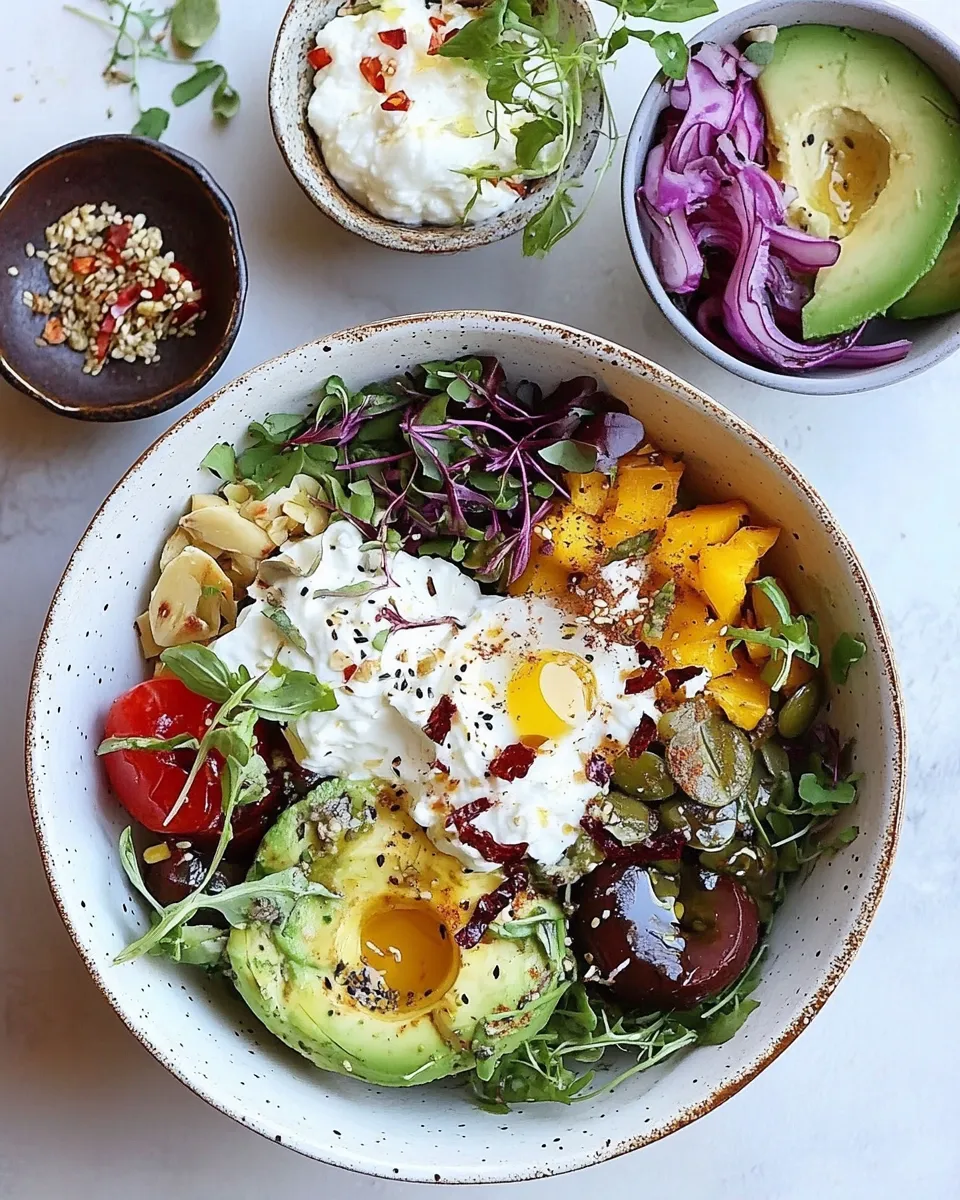
Once the vegetables are roasted, scrape the spaghetti squash strands into a bowl base. Layer the roasted beet, zucchini, and the mixed leafy greens on top. Add the sauerkraut for that probiotic boost, followed by the sunny-side-up eggs, sliced avocado, and a sprinkle of sunflower seeds. Finish with microgreens for an extra pop of flavor and nutrition.
Step 5: Drizzle with Kefir
Finally, drizzle the bowl with kefir for a creamy, tangy finish that complements all the flavors. Enjoy your Prebiotic and Probiotic Macro Bowls immediately or store them for later!
Seasonal Twists
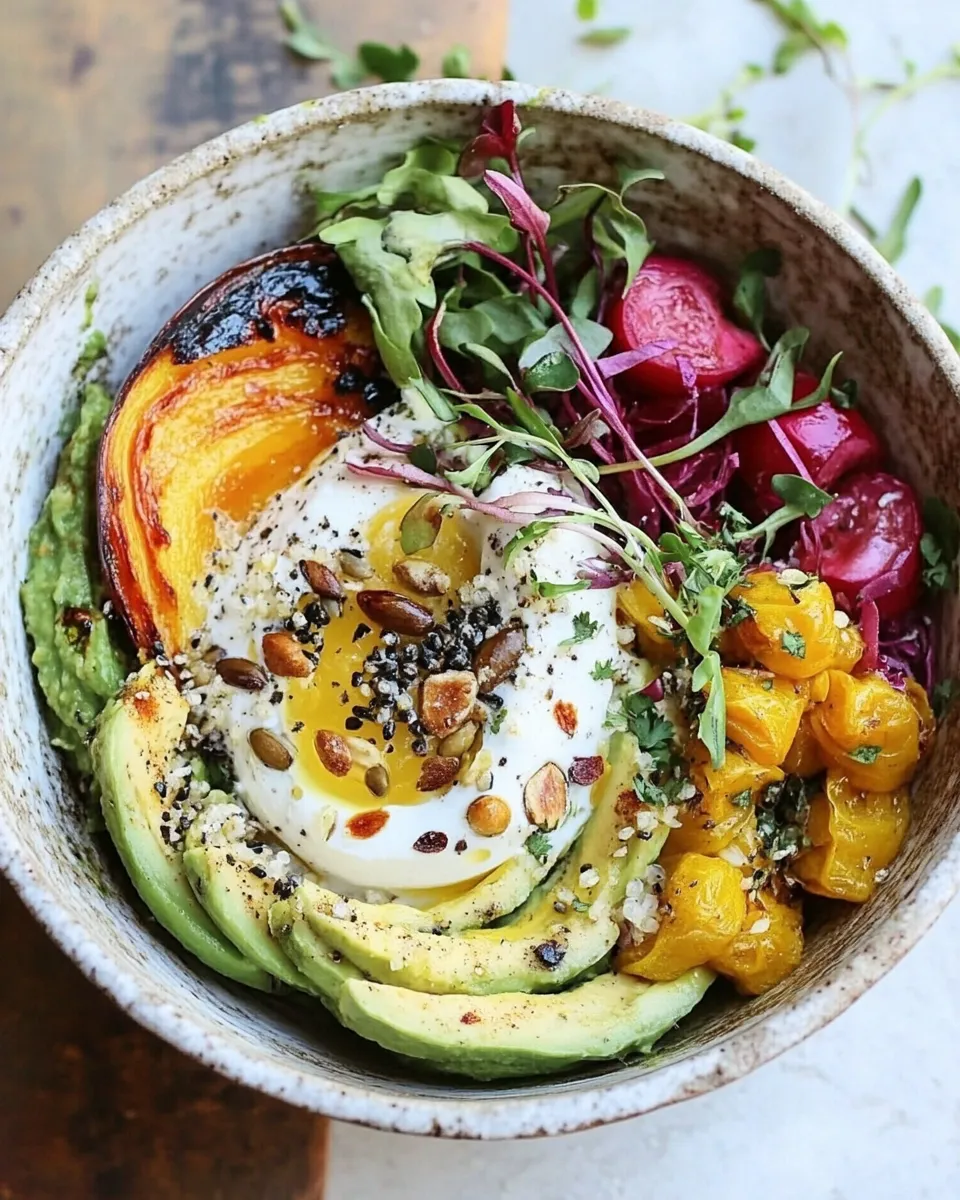
- Fall: Substitute roasted pumpkin or butternut squash for spaghetti squash.
- Winter: Incorporate roasted Brussels sprouts and add a sprinkle of pomegranate seeds for a festive touch.
- Spring: Use fresh herbs like dill or parsley and add radishes for a crunch.
- Summer: Swap the sauerkraut for fresh salsa or pico de gallo for a fresh twist.
Mistakes Even Pros Make
- Overcooking the vegetables: Keep an eye on your roasting times to ensure they retain their texture and flavor.
- Not seasoning enough: Don’t underestimate the power of seasoning! Salt and pepper can elevate the flavors significantly.
- Skipping the microgreens: They add not only flavor but also a nutritious punch. Don’t leave them out!
Make Ahead Like a Pro
If you’re looking to meal prep, these Prebiotic and Probiotic Macro Bowls are perfect for it. Roast your veggies ahead of time and keep them in airtight containers in the fridge for up to 4 days. When you’re ready to eat, simply reheat the vegetables, cook your eggs, and assemble your bowl. You can also prepare the leafy greens and toppings in advance to save time during the week.
Reader Questions
Can I use different vegetables in my macro bowl?
Absolutely! Feel free to mix and match based on what’s in season or what you have on hand. Just remember to roast them for the best flavor and texture.
What can I substitute for sauerkraut?
If you’re not a fan of sauerkraut, consider using kimchi for a spicy twist or even fermented pickles for that probiotic punch.
Is this recipe gluten-free?
Yes, all the ingredients in this Prebiotic and Probiotic Macro Bowls recipe are naturally gluten-free. Always check labels if you’re using packaged ingredients to ensure they meet your dietary needs.
Can I make this recipe vegan?
Definitely! You can replace the eggs with a tofu scramble or chickpeas for protein, and use a plant-based yogurt instead of kefir for the creamy element.
Bring It Home
Creating Prebiotic and Probiotic Macro Bowls is not just a meal; it’s an experience that nourishes your body and soul. With endless possibilities for customization, you can enjoy a different bowl every time you make it, while still reaping the benefits of the gut-friendly ingredients. Whether you’re enjoying a cozy dinner at home or packing a lunch for work, these bowls are sure to impress. So, grab your ingredients, roll up your sleeves, and get ready to dig into a bowl packed with flavor and wellness!
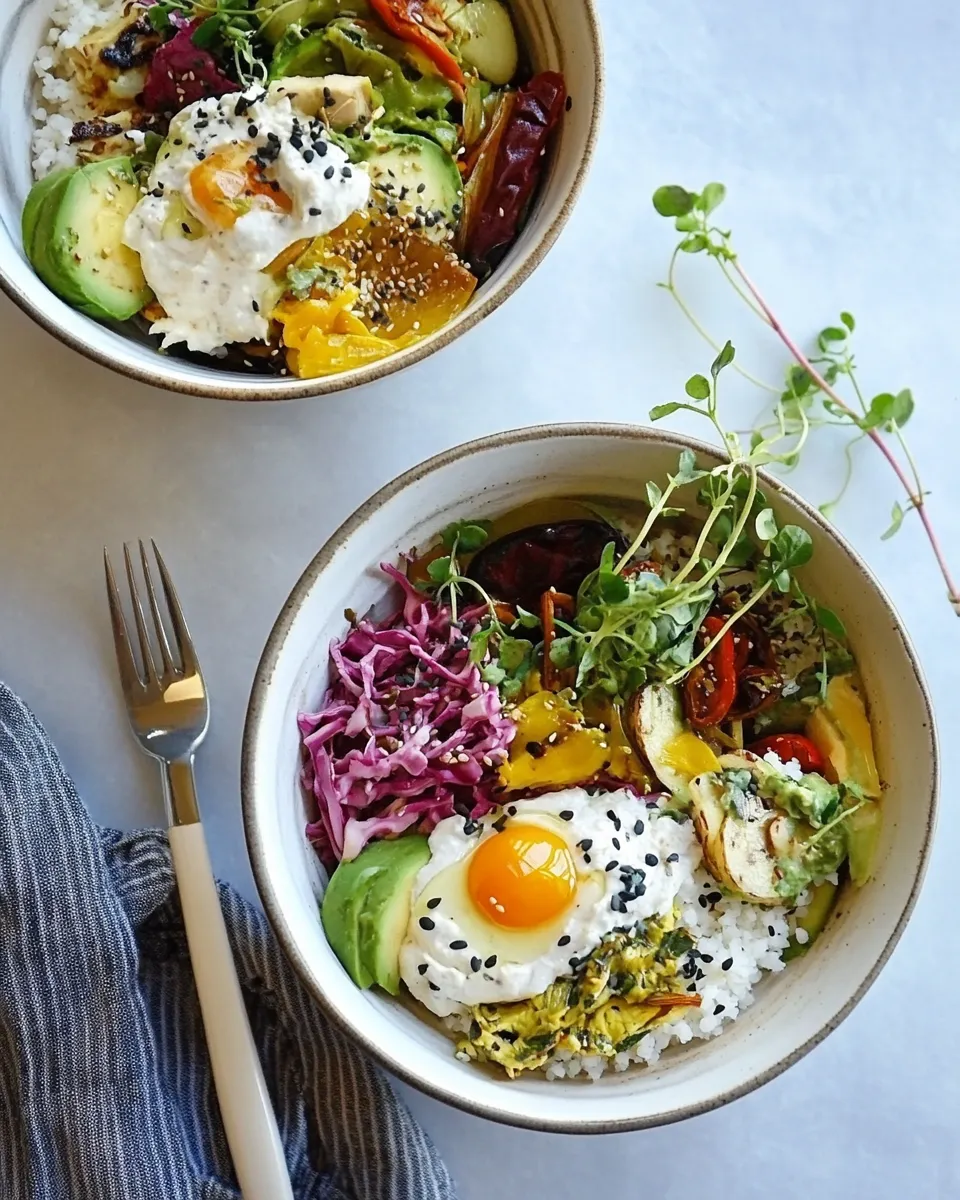
Prebiotic and Probiotic Macro Bowls
Ingredients
Equipment
Method
- Preheat your oven to 400°F (200°C). Cut the spaghetti squash in half lengthwise, scoop out the seeds, and drizzle the inside with olive oil, salt, and pepper. Place cut side down on a roasting pan. Roast for about 30-40 minutes until tender.
- Meanwhile, peel and cube the beet, and slice the zucchini into rounds. Toss them in olive oil, salt, and pepper, and roast them alongside the squash for about 25-30 minutes, or until they are fork-tender.
- While your vegetables are roasting, wash and dry your leafy greens. In a bowl, combine your mixed greens to create a vibrant base for your macro bowl.
- In a skillet over medium heat, add a little oil or butter. Crack the eggs into the skillet and cook until the whites are set but the yolks remain runny, about 4-5 minutes.
- Once the vegetables are roasted, scrape the spaghetti squash strands into a bowl base. Layer the roasted beet, zucchini, and the mixed leafy greens on top. Add the sauerkraut for that probiotic boost, followed by the sunny-side-up eggs, sliced avocado, and a sprinkle of sunflower seeds. Finish with microgreens for an extra pop of flavor and nutrition.
- Finally, drizzle the bowl with kefir for a creamy, tangy finish that complements all the flavors. Enjoy your Prebiotic and Probiotic Macro Bowls immediately or store them for later!
Notes
- These bowls are perfect for meal prep; roast your veggies ahead of time.
- Feel free to substitute vegetables based on seasonal availability.
- For a vegan version, replace eggs with tofu and use plant-based yogurt instead of kefir.